Hormones, Anxiety, Video Games, and DNA: Autism Research and Experts Available
Recent articles and Expert Profiles on Autism for media covering Autism Awareness Month in April
Study sheds light on a medical accessibility issue, the need for alternative or modified concussion assessment norms and the need for baseline testing.
Ongoing research projects by a New York Institute of Technology occupational therapist aim to improve quality of life through exercise and physical activity.
Dana-Farber Cancer Institute launched the Neuro-Inclusive Oncology Care and Empowerment Program, a psychosocial oncology program that is specialized for adults with intellectual and/or developmental disabilities (IDD).
Fragile X syndrome is one of the most commonly inherited forms of autism and intellectual disability, and no treatment currently exists. But a team of University of Illinois researchers has discovered a novel receptor function that may be used in a therapeutic approach to treatment.
Children’s Hospital Los Angeles (CHLA) neurologist Shafali Spurling Jeste, MD, has been named the 2024 recipient of the prestigious Martha Bridge Denckla Award from the Child Neurology Society. This award—named after a physician who pioneered the field of developmental cognitive neurology—honors physician-scientists of international standing who conduct research and clinical care focused on neurodevelopmental and neurobehavioral disorders.
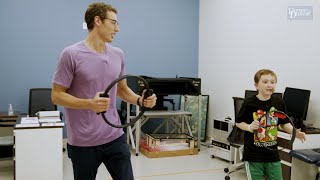
A University of Delaware lab is now pioneering the use of video games – specifically Nintendo Switch's Ring Fit – as an intervention to enhance movement and motor skills for children with autism. The research further demonstrates the positive impact of exercise-based games on cognition and social interactions.
In a paper in the prestigious journal Science to appear on Feb. 29, 2024, a multi-institutional team led by scientists at Carnegie Mellon University and University of California at Berkeley found parts of the genome, both within genes and outside of them, that evolved and are associated with vocal learning across mammals. These elements have been linked to autism in humans.
Supported by a $2 million R01 grant from the National Institutes of Health, the Auerbach Lab at the Beckman Institute for Advanced Science and Technology will examine how different genes associated with autism spectrum disorders may similarly impact our brain’s neurons, resulting in heightened sensitivity to sounds.
Individuals with Williams syndrome have a gregarious “cocktail party” personality, while those with the opposite genetic alteration, in contrast, tend to have autistic traits and are prone to struggle socially. Research from UC San Diego sheds new light on the gene responsible.
Results of a long-term outcome study found the innovative school social intervention (schoolMAX) and summer social intervention (summerMAX) created by the Institute for Autism Research at Canisius University yielded sustained, comparable, and positive longer-term outcomes for autistic youth (without intellectual disability).
In recognition of its expertise in treating SCN2A-related neurological disorders, UTHealth Houston has been designated as the first SCN2A Multidisciplinary Center by the FamilieSCN2A Foundation, the largest global advocacy organization for the group of disorders.
The program, organized by URI College of Nursing Professor Chris McGrane, provides respite care for parents of children with special needs, at no cost to them. For four hours every Saturday afternoon, McGrane and her team of URI students, take care of children with special needs, giving parents a chance to take a break from the sometimes daunting responsibilities of care.
Autism Spectrum Disorder (ASD), a neurodevelopmental condition characterized by decreased social communication and repetitive behaviors, has long intrigued scientists seeking to unravel its underlying mechanisms.
A new King’s College London scanning study of 390 babies has shown distinct patterns between term and pre-term babies in the moment-to-moment activity and connectivity of brain networks.
A new study at the University of Missouri’s Thompson Center for Autism and Neurodevelopment found that propranolol, a medication that treats high blood pressure, can also help lower anxiety for kids and young adults with autism spectrum disorder (ASD).
Babies and toddlers exposed to television or video viewing may be more likely to exhibit atypical sensory behaviors, such as being disengaged and disinterested in activities, seeking more intense stimulation in an environment, or being overwhelmed by sensations like loud sounds or bright lights, according to data from researchers at Drexel’s College of Medicine published today in the journal JAMA Pediatrics.
Researchers in the UNC School of Medicine’s Department of Psychiatry have found that enlarged perivascular spaces in the brains of babies, caused by an accumulation of excess cerebrospinal fluid, have a 2.2 times greater chance of developing autism later in life.
Researchers have found new disrupted genes and an unexpected molecular pattern—dubbed BREACHes—related to Fragile X Syndrome (FXS), a genetic disorder estimated by the Centers for Disease Control and Prevention to impact about 1 in 7,000 males about 1 in 11,000 females.
With the rise in machine learning applications and artificial intelligence, it's no wonder that more and more scientists and researchers are turning to supercomputers. Supercomputers are commonly used for making predictions with advanced modeling and simulations. This can be applied to climate research, weather forecasting, genomic sequencing, space exploration, aviation engineering and more.
Technology developed at the University of Wisconsin–Madison to grow “rosettes” of brain and spinal tissue gives scientists new ways to study the growing human brain, including a recent study of how genetic mutations linked to autism affect early stages of human brain development.It’s the latest discovery using RosetteArray technology, a screening tool that uses stem cells to generate embryonic forebrain or spinal cord tissue structures called neural rosettes.
The use of high-protease pancreatic replacement therapy demonstrated improvement in maladaptive behaviors, such as irritability, in preschool children with autism spectrum disorder (ASD), according to research conducted at 32 clinical sites, including UTHealth Houston.
UC Davis researchers are recruiting infants ages 6-12 months for a new national telehealth study aimed at understanding which developmental delays could indicate autism or other conditions.
Rutgers Institute for Health researcher Elizabeth Stone published new research finding that people with cognitive disabilities are less satisfied with their health care than those in the general population.
Join Dr. Akhgar Ghassabian's ECHO Discovery presentation on December 13 at 1 p.m. for insights into emerging evidence linking environmental chemical exposure to autism.
With a single flash of light to the eye, artificial intelligence (AI) could deliver a faster and more accurate way to diagnose autism spectrum disorder (ASD) in children, according to new research from the University of South Australia and Flinders University.
Australian researchers have flagged potential concerns over the use of social chatbots, calling for more studies into the impact of the AI software on neurodiverse people and those who find human interaction difficult.
What happens in the brain to cause many neurodevelopmental disorders, including autism spectrum disorder (ASD), remains a mystery. A major limitation for researchers is the lack of biomarkers, or objective biological outputs, for these disorders, and in the case of ASD, for specific subtypes of disease.
A gene previously linked to autism spectrum disorder (ASD) by UT Southwestern Medical Center researchers appears to play an important role in steering cells in the brain’s hippocampus toward their ultimate identities, the same team reported in a new study.
A new meta-analysis led by Micheal Sandbank, PhD, an assistant professor at the UNC School of Medicine, reveals a crucial need for more high-quality early intervention studies to help clinicians understand how to better support children diagnosed with the condition.
The first study into raising a child on the autism spectrum using the Minimum Income Standard (MIS) approach, has found that families and carers face costs of more than £2,650 each year – to cover everyday essentials that meet their children’s needs.
Using artificial intelligence tools to analyze years of biomedical data, researchers at Rensselaer Polytechnic Institute have discovered a possible connection between sleep, gastrointestinal health, and two potentially harmful behaviors often associated with profound autism: self-injury and aggression. Their study is published in the Journal of Personalized Medicine.
Compared with the general population, epilepsy is more common in people with autism—and autism is more common in people with epilepsy. How can autism affect the diagnosis and treatment of epilepsy, and vice versa? Joy Mazur spoke to Dr. Colin Reilly and Dr. Stéphane Auvin.
Rutgers University has received a grant from the New Jersey Office of the Secretary of Higher Education (OSHE) – which, coupled with strategic funds from the Office of the Chancellor at the New Brunswick campus – will make it possible to bolster assessment and treatment services for Rutgers students with attention-deficit/hyperactivity disorder (ADHD) and autism at a fraction of the typical cost.
The incidence of autism spectrum disorder (ASD) and attention deficit hyperactivity disorder (ADHD) has greatly increased over the last few decades. The reasons are largely unknown although environmental factors are believed to be important.
Researchers at the Beckman Institute for Advanced Science and Technology have established the protein p53 as critical for regulating sociability, repetitive behavior, and hippocampus-related learning and memory in mice, illuminating the relationship between the protein-coding gene TP53 and neurodevelopmental and psychiatric disorders.
Developmental disabilities affect one in every six children, including conditions such as autism and attention-deficit/hyperactivity disorder, or ADHD.







 RSS
RSS