The Martinot Lab at Cummings School of Veterinary Medicine at Tufts University, where faculty and students have been researching the mpox virus in endometrial tissues to raise awareness of the potential increased risk of mpox virus for women.
In recent advancements, flexible pressure sensors have been developed to mimic human skin's sensitivity, significantly benefiting fields like interactive technologies, health monitoring, and robotics. These innovations leverage a variety of microstructural strategies, including pyramidal, dome, wrinkle, and layered structures, for enhanced sensitivity and durability. Despite their potential, current designs often involve complex manufacturing processes. Addressing these challenges, new approaches aim to simplify sensor fabrication while broadening their pressure detection capabilities and stress tolerance, pushing the boundaries of sensor technology towards more efficient and versatile applications.
Digital Science has launched its Open Principles, a new initiative that commits its research information solutions to open science now and into the future.
Now is one of the most important times of year to keep birds safe by reducing non-essential lighting at night and treating window glass so birds can see it and avoid deadly collisions.
Florida is projected to lose 3.5 million acres of land to development by 2070. A new study highlights how Florida can buffer itself against both climate change and population pressures by conserving the remaining 8 million acres of “opportunity areas” within the Florida Wildlife Corridor (FLWC), the only designated statewide corridor in the U.S.
As wildfires, floods and other climate disasters spread across the country, a first-of-its-kind study
finds that Florida’s ambitious Wildlife Corridor has the potential to shield the state from similar
threats.
access_time Embargo lifts in 2 days
This news release is embargoed until 19-Apr-2024 10:00 AM EDT
Released to reporters: 16-Apr-2024 7:05 AM EDT
A reporter's PressPass is required to
access this story until the embargo expires on 19-Apr-2024 10:00 AM EDT
The Newswise PressPass gives verified journalists access to embargoed stories.
Please log in to complete a presspass application.
If you have not yet registered, please Register. When you
fill out the registration form, please identify yourself as a reporter in order to
advance to the presspass application form.
A research team has elucidated the role of polyploidy in the evolution and breeding of vegetable crops, leveraging advanced sequencing technologies to dissect the genetic and epigenetic nuances of polyploids.
A research team has shed light on the early morning 'golden hours' as a pivotal time for achieving optimal water use efficiency (WUE) in crops, revealing that plants can maintain lower transpiration rates and higher photosynthetic activity under favorable light conditions and minimal vapor pressure deficit (VPD).
A research team delves into the role of the Target of Rapamycin (TOR) signalling pathway in plant grafting, emphasizing its role in regulating seedling vigor, graft junction healing, and shoot-to-root communications.
access_time Embargo lifts in 2 days
This news release is embargoed until 17-Apr-2024 5:00 AM EDT
Released to reporters: 16-Apr-2024 5:00 AM EDT
A reporter's PressPass is required to
access this story until the embargo expires on 17-Apr-2024 5:00 AM EDT
The Newswise PressPass gives verified journalists access to embargoed stories.
Please log in to complete a presspass application.
If you have not yet registered, please Register. When you
fill out the registration form, please identify yourself as a reporter in order to
advance to the presspass application form.
access_time Embargo lifts in 2 days
This news release is embargoed until 17-Apr-2024 7:05 PM EDT
Released to reporters: 16-Apr-2024 4:05 AM EDT
A reporter's PressPass is required to
access this story until the embargo expires on 17-Apr-2024 7:05 PM EDT
The Newswise PressPass gives verified journalists access to embargoed stories.
Please log in to complete a presspass application.
If you have not yet registered, please Register. When you
fill out the registration form, please identify yourself as a reporter in order to
advance to the presspass application form.
Aalto University researchers adapt a novel force measurement technique to uncover the previously unidentified physics at play at the thin air-film gap between water droplets and superhydrophobic surfaces.
Rain jackets, swimming trunks or upholstery fabrics: Textiles with water-repellent properties require chemical impregnation. Although fluorine-containing PFAS chemicals are effective, they are also harmful to human health and accumulate in the environment.
According to a research team led by palaeontologists from the University of Vienna, the net-like leaf veining typical for today’s flowering plants developed much earlier than previously thought, but died out again several times.
The chloroplast (cp) is critical for various biological functions in plants, such as photosynthesis and stress responses, with its genome offering simpler analysis and sequencing due to its size and reduced homologous influence.
A research team reviews the critical relationship between the accumulation of anthocyanins and organic acids in fruits, highlighting how these factors influence fruit color and consumer appeal through changes in vacuolar pH.
The transition from vegetative to reproductive stages in plants involves both internal and external cues, with grapevines (Vitis vinifera L. cv. Pixie) presenting a unique case.
The research unveils the superior tolerance of 'Shuzhen No.1', a novel Citrus junos rootstock, to flooding, alkaline, and freezing stresses over commonly used rootstocks. Grafted scions on 'Shuzhen No.1' exhibited enhanced growth and vigor, making it a promising candidate for future citrus cultivation.
In March 2024, WCS trained 30 scientists from across the Coral Triangle in simple field methods to measure coral bleaching and identify climate resilient coral reefs.
Yale School of Medicine immunobiologist Akiko Iwasaki, PhD, will receive the 2024 Nakaakira Tsukahara Memorial Award from the Brain Science Foundation of Japan.
Scientists know of more than 3,300 isotopes. Researchers have compiled experimental nuclear data for all known nuclei, including mass, quantum numbers, half-life, decay modes, and branching intensities.
A new $3.4 million award to the Wayne State University School of Medicine from the National Institutes of Health aims to overcome the limitations of conventional semen analyses by examining mitochondrial DNA levels in sperm as a novel biomarker of sperm fitness.
Gracias a las imágenes que podrán ser obtenidas con seis filtros distintos montados en la cámara más grande construida para la astronomía, el Observatorio Vera C. Rubin estará en condiciones de descubrir los efectos de la interacción de la materia oscura con corrientes estelares nunca antes vistos en la Vía Láctea.
Digital Science solutions metaphacts and Dimensions announce the launch of the Dimensions Knowledge Graph, a large ready-made knowledge graph powering AI solutions in the pharmaceutical and life sciences industries.
Scientists recently used a machine learning approach called anomaly detection to analyze large volumes of data from the Large Hadron Collider at CERN. The method has never before been applied to data from a collider experiment.
A team of researchers has unveiled a novel approach to accurately characterizing tree height composition in forests using the Global Ecosystem Dynamics Investigation (GEDI) Light Detection and Ranging (LiDAR) technology.
You may have flown a flight simulator in a computer game or at a science museum. Landing without crashing is always the hardest part. But that’s nothing compared to the challenge that engineers are facing to develop a flight simulation of the very large vehicles necessary for humans to explore the surface of Mars. The Red Planet poses innumerable challenges to astronauts, not the least of which is getting there. That’s where the Department of Energy Office of Science’s user facility supercomputers come in. Researchers at DOE’s Oak Ridge Leadership Computing Facility (OLCF) are working with NASA engineers and scientists to simulate the process of slowing down a huge spacecraft as it moves towards Mars’ surface.
Today marks the startup of the 24th run of the Relativistic Heavy Ion Collider (RHIC), a U.S. Department of Energy (DOE) Office of Science user facility for nuclear physics research at DOE's Brookhaven National Laboratory.
Recently, a study introduced a novel method that significantly enhances the precision and efficiency of precise orbit determination and clock estimation the Global Positioning System (GPS), BeiDou, Galileo, and Global'naya Navigatsionnaya Sputnikovaya Sistema (GLONASS) satellite systems. This work in Un-Differenced (UD) Integer Ambiguity Resolution (IAR) simplifies satellite navigation data processing and dramatically improves precise positioning accuracy.
The mining industry is booming, but the industry is digging deep to find highly trained mining engineers. Across all sectors, from consumer electronics to the defense industry and from automotive manufacturing to aerospace, mineral needs are increasing. In particular, green energy technologies such as electric vehicle batteries, solar panels, grid energy storage, and wind turbines require such metals as copper, lithium, cobalt, rare earths, and manganese.
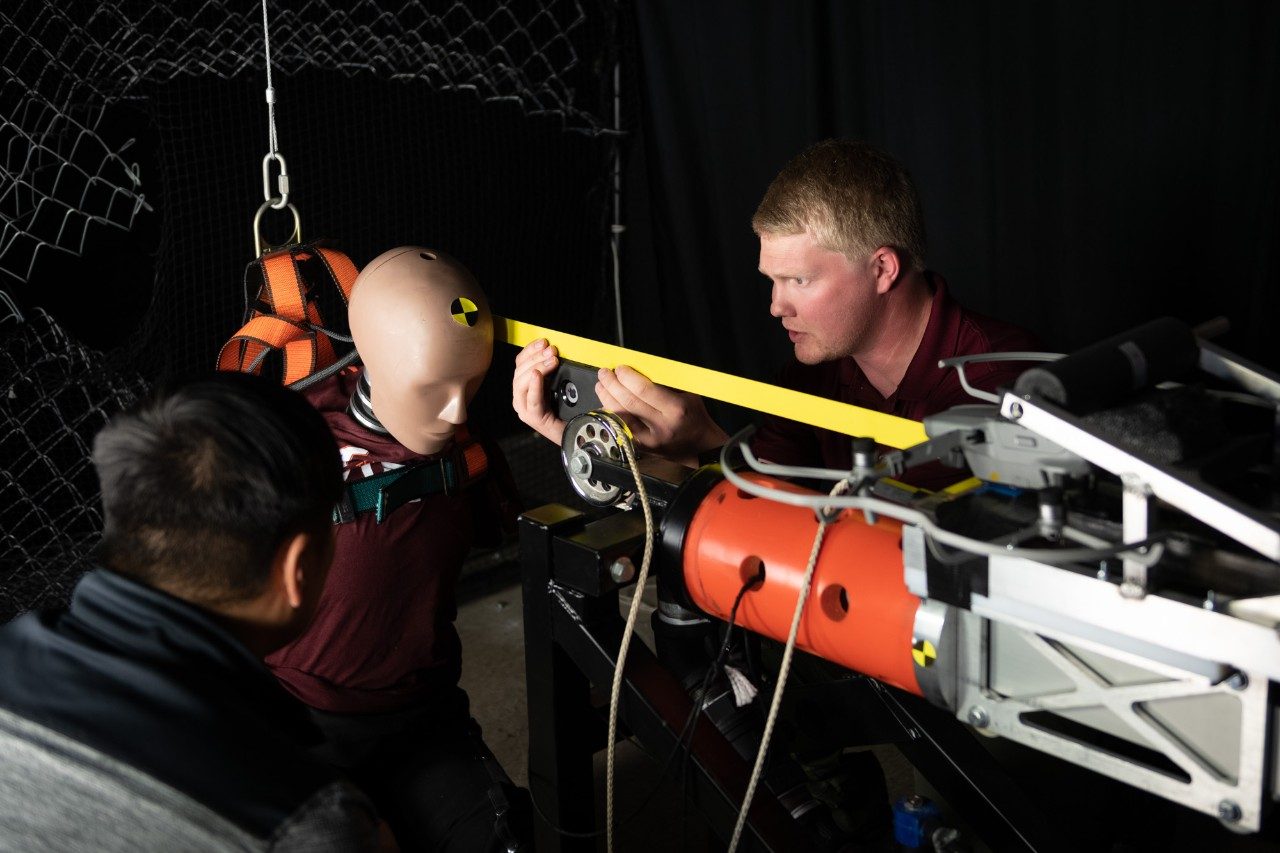
Federal approvals for flying drones over people have been advanced through Virginia Tech research. As of April 5, the updated means of compliance established by the Virginia Tech Mid-Atlantic Aviation Partnership has been accepted by the Federal Aviation Administration (FAA) and published as a notice of availability in the federal register, establishing its availability for use.
If artificial intelligence (AI) was a car, data would be the fuel. But what if there was no way to ensure that fuel wasn’t full of waste? How would this fuel be filtered, and how would that information reach consumers? Ran Jin, associate professor in the Grado Department of Industrial and Systems Engineering, is determined to fuel AI models in the Manufacturing Industrial Internet with high-quality data.
In this review, the potential relationship between the structure and activity of polysaccharides was summarized by analyzing the influence of physical and chemical properties of polysaccharides, such as extraction method, molecular weight, monosaccharide composition, functional group and structural modification, etc., which laid a foundation for the analysis of the structure-activity relationship of polysaccharides and improved its cosmetic value.
Biologist B. Duygu Özpolat at Washington University in St. Louis and colleagues published a single-cell atlas for a highly regenerative annelid worm. This research may help inform stem cell technologies and regenerative medicine down the line.
access_time Embargo lifts in 2 days
This news release is embargoed until 17-Apr-2024 11:00 AM EDT
Released to reporters: 15-Apr-2024 5:05 AM EDT
A reporter's PressPass is required to
access this story until the embargo expires on 17-Apr-2024 11:00 AM EDT
The Newswise PressPass gives verified journalists access to embargoed stories.
Please log in to complete a presspass application.
If you have not yet registered, please Register. When you
fill out the registration form, please identify yourself as a reporter in order to
advance to the presspass application form.
A new Bar-Ilan University study has achieved a milestone in the realm of artificial intelligence (AI) by addressing a fundamental question: Can deep learning architectures achieve greatly above-average confidence for a significant portion of inputs while maintaining overall average confidence?
When superconductors encounter too much current, they can become resistive. Researchers can design microscopic electronic components that use this effect to create a switch, like a transistor. The resulting nanowire superconducting switching devices (called nano-cryotrons, or nTrons) show promise for future superconducting electronics or particle detectors.
The Acoustical Society of America and the Canadian Acoustical Association are co-hosting a joint meeting May 13-17 at the Shaw Centre/Westin Ottawa Hotel.
In a new paper published in JACS AU, researchers at the University of Illinois Urbana-Champaign analyzed the effects of solvation and ion valency on metallopolymers, with implications for critical materials recovery and recycling, and environmental remediation.
access_time Embargo lifts in 2 days
This news release is embargoed until 18-Apr-2024 10:00 AM EDT
Released to reporters: 12-Apr-2024 1:05 PM EDT
A reporter's PressPass is required to
access this story until the embargo expires on 18-Apr-2024 10:00 AM EDT
The Newswise PressPass gives verified journalists access to embargoed stories.
Please log in to complete a presspass application.
If you have not yet registered, please Register. When you
fill out the registration form, please identify yourself as a reporter in order to
advance to the presspass application form.
The US Department of State and the Fulbright Foreign Scholarship Board have selected Stony Brook University Professor Kenneth Lanzetta, PhD, in the Department of Physics and Astronomy, as a Fulbright US Scholar for 2024-2025.
The University of Texas MD Anderson Cancer Center’s Research Highlights showcases the latest breakthroughs in cancer care, research and prevention. These advances are made possible through seamless collaboration between MD Anderson’s world-leading clinicians and scientists, bringing discoveries from the lab to the clinic and back.
Argonne National Laboratory and RIKEN, leaders in high performance computing in the U.S. and Japan, have established a cooperative relationship in support of artificial intelligence computing projects.










 RSS
RSS