

 Loading

Spotlight

Argonne employees help schools across Chicagoland celebrate global Hour of Code
Argonne National Laboratory

DOE’s Office of Science Is Now Accepting Applications for Fall 2024 Undergraduate Internships
Department of Energy, Office of Science

A new approach to transportation: Pairing off-street parking with electric scooters
Argonne National Laboratory
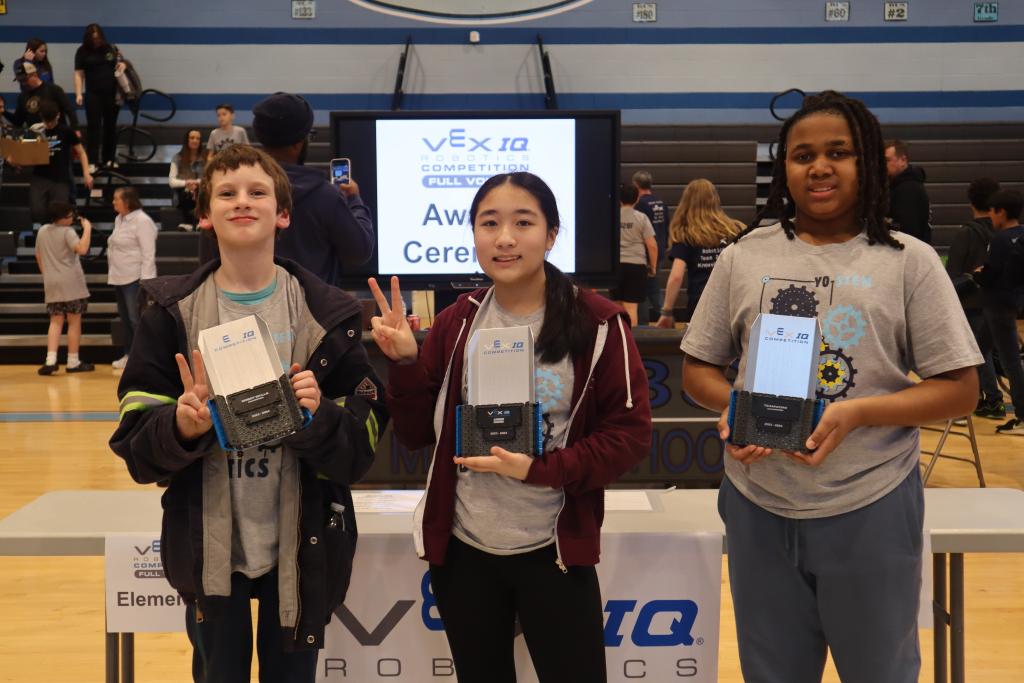
Hands-on science creates winning conditions for local youth
Oak Ridge National Laboratory

New All About Energy high school curriculum sets the stage for Argonne’s future outreach and partnerships
Argonne National Laboratory

Argonne introduces new hydropower activity for STEM fests
Argonne National Laboratory

Argonne hosts resume writing workshop for veterans
Argonne National Laboratory
Argonne’s STEM mapping project highlights opportunities on Chicago’s south side
Argonne National Laboratory
Argonne summer school gives underrepresented students a hands-on introduction to physical science
Argonne National Laboratory

Humidity – not just light – causes color degradation in historical paintings, researchers discover
SLAC National Accelerator Laboratory

UTEP Receives $1.25M Grant from DOE to Produce Pipeline of Scientists and Engineers
University of Texas at El Paso

Brookhaven Lab Integrates the Rising STEM Scholars Program
Brookhaven National Laboratory

Intern talks about his upcoming summer of research and fusion energy with Energy Secretary Jennifer Granholm
Princeton Plasma Physics Laboratory

ORNL partners on science kits for STEM schools
Oak Ridge National Laboratory
Graduate students gather virtually for summer school at PPPL
Princeton Plasma Physics Laboratory
Virtual internships for physics students present challenges, build community
Princeton Plasma Physics Laboratory
Blocking the COVID-19 Virus's Exit Strategy
Brookhaven National Laboratory

From Nashville to New Hampshire, PPPL’s student interns do research, attend classes and socialize from their home computers
Princeton Plasma Physics Laboratory

Graduate student at PPPL Ian Ochs wins top Princeton University fellowship
Princeton Plasma Physics Laboratory

Chicago Public School students go beyond coding and explore artificial intelligence with Argonne National Laboratory
Argonne National Laboratory

Barbara Garcia: A first-generation college student spends summer doing research at PPPL
Princeton Plasma Physics Laboratory

Argonne organization’s scholarship fund blazes STEM pathway
Argonne National Laboratory
Brookhaven Lab, Suffolk Girl Scouts Launch Patch Program
Brookhaven National Laboratory

From an acoustic levitator to a “Neutron Bloodhound” robot, hands-on research inspires PPPL's summer interns
Princeton Plasma Physics Laboratory
Brookhaven Lab Celebrates the Bright Future of its 2019 Interns
Brookhaven National Laboratory

PPPL apprenticeship program offers young people chance to earn while they learn high-tech careers
Princeton Plasma Physics Laboratory

JSA Awards Graduate Fellowships for Research at Jefferson Lab
Thomas Jefferson National Accelerator Facility
ILSAMP Symposium showcases benefits for diverse students, STEM pipeline
Argonne National Laboratory
Integrating Scientific Computing into Science Curricula
Brookhaven National Laboratory
Students from Minnesota and Massachusetts Win DOE’s 29th National Science Bowl®
Department of Energy, Office of Science
DOE’s Science Graduate Student Research Program Selects 70 Students to Pursue Research at DOE Laboratories
Department of Energy, Office of Science
Young Women’s Conference in STEM seeks to change the statistics one girl at a time
Princeton Plasma Physics Laboratory
Students team with Argonne scientists and engineers to learn about STEM careers
Argonne National Laboratory
Lynbrook High wins 2019 SLAC Regional Science Bowl competition
SLAC National Accelerator Laboratory
Equipping the next generation for a technological revolution
Argonne National Laboratory
Chemistry intern inspired by Argonne’s real-world science
Argonne National Laboratory

Research on Light-Matter Interaction Could Lead to Improved Electronic and Optoelectronic Devices
Rensselaer Polytechnic Institute (RPI)

Innovating Our Energy Future
Oregon State University, College of Engineering

Physics graduate student takes her thesis research to a Department of Energy national lab
University of Alabama at Birmingham

“Model” students enjoy Argonne campus life
Argonne National Laboratory

Writing Code for a More Skilled and Diverse STEM Workforce
Brookhaven National Laboratory

New graduate student summer school launches at Princeton Plasma Physics Laboratory
Princeton Plasma Physics Laboratory

The Gridlock State
California State University (CSU) Chancellor's Office

Meet Jasmine Hatcher and Trishelle Copeland-Johnson
Brookhaven National Laboratory

Argonne hosts Modeling, Experimentation and Validation Summer School
Argonne National Laboratory

Undergraduate Students Extoll Benefits of National Laboratory Research Internships in Fusion and Plasma Science
Princeton Plasma Physics Laboratory

Students affected by Hurricane Maria bring their research to SLAC
SLAC National Accelerator Laboratory

Brookhaven Lab Pays Tribute to 2018 Summer Interns
Brookhaven National Laboratory


CSUMB Selected to Host Architecture at Zero Competition in 2019
California State University, Monterey Bay
Showing results
0-6 Of 50-
News keyboard_arrow_right
Latest News Coronavirus News Currently Embargoed News Research News Releases Google Fact Check Research Alert Preprints Marketplace News with Video/Audio Multimedia
 RSS
Medicine keyboard_arrow_right
Sciencekeyboard_arrow_right
Life keyboard_arrow_right
Business keyboard_arrow_right
Journal News keyboard_arrow_right
By Location keyboard_arrow_right
Meetings, Grants, and Events keyboard_arrow_right
RSS
Medicine keyboard_arrow_right
Sciencekeyboard_arrow_right
Life keyboard_arrow_right
Business keyboard_arrow_right
Journal News keyboard_arrow_right
By Location keyboard_arrow_right
Meetings, Grants, and Events keyboard_arrow_right