Mental health issues during pregnancy or the first year of parenthood have a much greater chance of getting detected and treated now than just over a decade ago, a trio of new studies suggests. But the rise in diagnosis and care hasn’t happened equally across different groups and states.
Not for public release
This news release is embargoed until 1-Apr-2024 5:00 AM EDT
Released to reporters: 28-Mar-2024 8:05 AM EDT
A reporter's PressPass is required to
access this story until the embargo expires on 1-Apr-2024 5:00 AM EDT
The Newswise PressPass gives verified journalists access to embargoed stories.
Please log in to complete a presspass application.
If you have not yet registered, please Register. When you
fill out the registration form, please identify yourself as a reporter in order to
advance to the presspass application form.
The ACS applauds the Washington State Legislature for enacting Senate Bill 5790, which mandates that schools in the state of Washington maintain and provide bleeding control equipment on campus and includes other measures to greatly help communities respond to bleeding emergencies.
Following the outbreak of the Israel-Hamas war, Bar-Ilan University Prof. Amit Shrira led a study measuring acute stress and post-traumatic stress disorder (PTSD) symptoms among Israelis between November-December 2023, shedding light on the impact of the conflict on mental health across generations.
The stress-induced mechanisms that cause our brain to produce feelings of fear in the absence of threats — such as in PTSD — have been mostly a mystery. Now, neurobiologists have identified the changes in brain biochemistry and mapped the neural circuitry that cause generalized fear experiences.
A research has developed a new nanoparticle treatment that significantly improves outcomes for severe burn-induced intestinal barrier disruption. The study introduces Luminol-conjugated cyclodextrin (LCD) nanoparticles, offering a promising therapeutic intervention for one of the most critical complications following severe burn injuries.
Middle-age veterans who experienced concussions due to blasts from explosive devices may have biomarkers in their spinal fluid similar to people who develop Alzheimer’s disease, according to a new study published in the March 13, 2024, online issue of Neurology®, the medical journal of the American Academy of Neurology.
Researchers have received a three-year, $500,000 grant from the National Science Foundation to measure cognitive workload with a wearable sensor to monitor how children recover from a brain injury.
The incidence of school shootings more than quadrupled over the past 53 years, according to a new study analyzing data from the Center for Homeland Defense and Security (CHDS). To curtail the trend and help prevent future school shootings, researchers offered five key steps to address the problem through a public health approach.
People who have headaches after experiencing concussions may also be more likely to have higher levels of iron in areas of the brain, which is a sign of injury to brain cells, according to a preliminary study released today, March 5, 2024, that will be presented at the American Academy of Neurology’s 76th Annual Meeting taking place April 13–18, 2024, in person in Denver and online.
Cummings School of Veterinary Medicine's Henry and Lois Foster Hospital for Small Animals is one of only five facilities worldwide and is certified by the American College of Veterinary Emergency and Critical Care’s (ACVECC) Veterinary Committee on Trauma (VetCOT) as a Level I Vet Trauma Center.
A new collaborative study between Boston Medical Center, Brigham and Women’s Hospital, Boston Children’s Hospital, Hennepin Healthcare Research Institute, University of Pennsylvania, and Children’s Hospital of Philadelphia finds exposure to neighborhood violence among children was associated with unmet health needs and increased acute care utilization.
Not for public release
This news release is embargoed until 26-Feb-2024 5:00 PM EST
Released to reporters: 20-Feb-2024 2:00 PM EST
A reporter's PressPass is required to
access this story until the embargo expires on 26-Feb-2024 5:00 PM EST
The Newswise PressPass gives verified journalists access to embargoed stories.
Please log in to complete a presspass application.
If you have not yet registered, please Register. When you
fill out the registration form, please identify yourself as a reporter in order to
advance to the presspass application form.
People who experienced a disaster had a higher prevalence of problem alcohol use in the years after the disaster, and the rates of problem alcohol use increased over time. A study of nuclear power plant workers who experienced a disaster found that those who were exposed to life-threatening danger, discrimination, death of a colleague, or major property loss had an increased prevalence of problem alcohol use. However, for some, the increase in problem drinking did not occur until more than a year after the disaster. The study’s findings, recently published in Alcohol: Clinical and Experimental Research, point to the prolonged impacts on people who experience disaster and the importance of providing long-term monitoring and support beyond the immediate aftermath of the disaster.
Researchers unveiled a novel therapy for diabetic wound healing. This research highlights the use of exosomal miR-4645-5p from hypoxic bone marrow mesenchymal stem cells (BMSCs) to significantly enhance wound healing by promoting keratinocyte autophagy.
Michigan State University College of Human Medicine and the Jacobs School of Medicine and Biomedical Sciences at the University of Buffalo partnered to host the inaugural Remembrance Conference to address firearm violence through a public health approach.
Tufts University School of Medicine researchers develop imaging technology that records neuronal activity throughout the brain during the first weeks of recovery from traumatic brain injury
Service members who have had a moderate, severe, or penetrating traumatic brain injury, or TBI, are at a greater risk for subsequently developing brain cancer, according to a collaborative study led by researchers at the Uniformed Services University (USU) published February 15, 2024, in JAMA Open Network. On the other hand, those who have suffered mild TBI, or concussion – which is much more common – may not be associated with later brain cancer diagnoses, the study finds.
One of the key goals of medical science is to speed up the healing of tissue injuries in a way that would not enable the forming of less functional scar tissue in the affected areas.
Surgeons and investigators from Cedars-Sinai Orthopaedics bring their leading-edge expertise in treatment and the latest clinical research to the annual meeting of the American Academy of Orthopaedic Surgeons (AAOS) in San Francisco February 12-16.
The lifting of a two-decade drought in federal funding for firearm injury prevention research was strongly associated with an increase in both clinical trials and publications on gun violence, according to a new report published in JAMA Surgery.
A significant estate gift of $6.5 million from the late Arthur D. and Kazuko Maine will support emergency medical care across the University Hospitals health system, expanding the now named Arthur D. and Kazuko Maine Trauma Unit at UH Ahuja Medical Center, establishing the first two endowed positions within emergency medicine at UH and supporting an endowed chair for orthopedic trauma.
A new study finds there are simple activities that help people improve their mood and emotional well-being on a day-to-day basis after the traumatic loss of a loved one.
A large multicenter clinical trial co-led by University of Maryland School of Medicine researchers found that an antiseptic containing iodine resulted in about one-quarter fewer post-surgical infections in patients with limb fractures compared to another frequently used skin antiseptic.
Prerana Shrestha, PhD, from the Department of Neurobiology and Behavior in the Renaissance School of Medicine at Stony Brook University, has received a $2.2 million grant from the National Institute of Mental Health (NIMH) for research on why people with Post-Traumatic Stress Disorder (PTSD) have persistent intrusive memories of the traumatic experience.
Surgeons and scientists at UCLA Health will present data on the latest basic science, translational and health services research that has the potential to improve patient care at the 19th annual Academic Surgical (ASC) Congress in Washington, D.C., Feb. 6 to 8.
RUDN University doctors were able to mitigate inflammation in the brain after a traumatic brain injury with the help of intranasal administration of the developed nootropic drug.
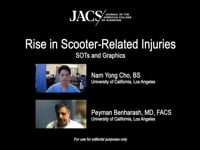
The prevalence and severity of scooter-related injuries, as well as associated health care costs, have significantly increased in the U.S., a new JACS study finds.
Scooter injuries nearly tripled across the U.S. from 2016 to 2020, with a concurrent increase in severe injuries requiring orthopedic and plastic surgery over the same period.
Chronic pain affects approximately 60% of people living with traumatic brain injury (TBI), even up to 30 years after injury, according to new research published in The Journal of Head Trauma Rehabilitation (JHTR), the official journal of the Brain Injury Association of America. The journal is published in the Lippincott portfolio by Wolters Kluwer.
Developed by University of Wisconsin–Madison engineers, the new material — a vertically aligned carbon nanotube foam—can dissipate an enormous amount of rotational kinetic energy from an impact.
If hospitals consistently and comprehensively support trauma survivors with mental health needs, including after they’re discharged, the survivors are less likely to find themselves back in the hospital in crisis, a new study has found.
With the rise in machine learning applications and artificial intelligence, it's no wonder that more and more scientists and researchers are turning to supercomputers. Supercomputers are commonly used for making predictions with advanced modeling and simulations. This can be applied to climate research, weather forecasting, genomic sequencing, space exploration, aviation engineering and more.
In an effort to better optimize the triage of patients during mass casualty events, University of Maryland School of Medicine (UMSOM) researchers are receiving up to $7.3 million in funding from the Defense Advanced Research Project Agency (DARPA) for vital new research








 RSS
RSS